

More than 80 Chinese companies have delisted their shares from U.S. exchanges since 2019, according to data provider Wind. Around 275 China-based companies now represent less than 2% of the capitalization of shares traded on the New York Stock Exchange and Nasdaq.
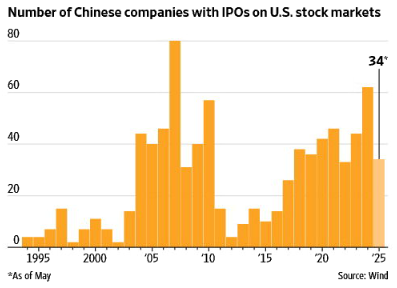
Chinese initial public offerings still pour in—in fact, 2024 saw the highest number in years—but most are tiny, highly speculative stocks, not the mega billion-dollar “red chips” of yesteryear. The 62 Chinese offerings last year raised an average of under $7 million. Some struggle to maintain the minimum 300 public shareholders, a red flag for investors that they could be risky or outright scams.
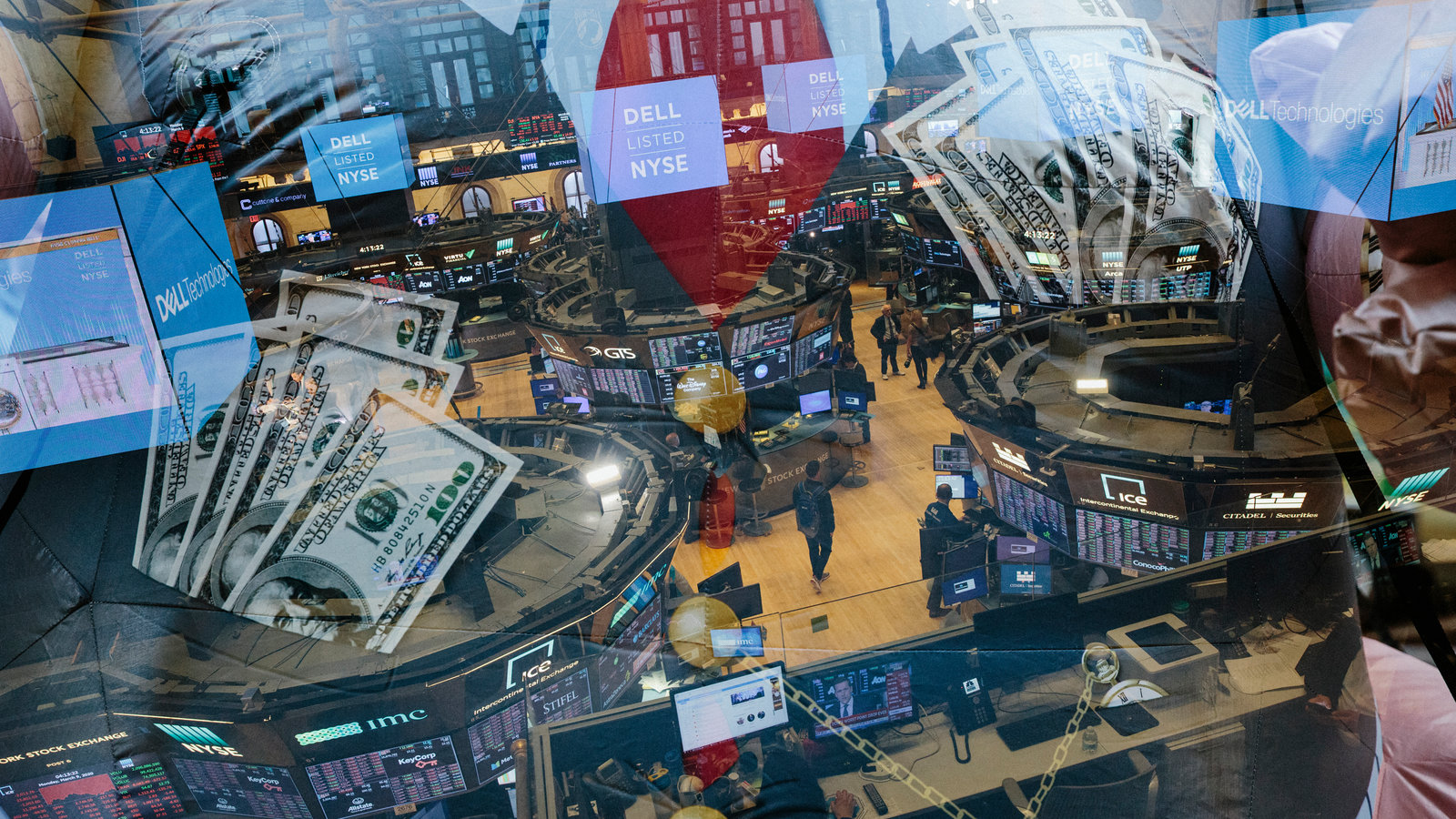
Not long ago, a U.S. listing was the pinnacle of a Chinese company’s success, and the NYSE and Nasdaq competed to land hot Chinese IPOs.
When online merchant Alibaba listed in 2014, the NYSE adorned its columns with a Chinese flag, and co-founder Jack Ma emerged an instant celebrity. The nearly $25 billion IPO was the world’s largest and followed a string of Chinese listings in the U.S., including by internet firms such as Baidu and JD.com as well as government owned behemoths like China Mobile, China Eastern Airlines and PetroChina .
Shares of Starbucks competitor Luckin Coffee crashed amid allegations of financial shenanigans before U.S. regulators forced it off Nasdaq in 2020, just a year or so after an IPO raised $651 million.
The Luckin case highlighted how Beijing’s secrecy laws long made it difficult for U.S. regulators to examine the accounting of China-based firms. In its wake and following delisting threats by Washington, a U.S. China deal in 2022 gave an American government watchdog rights to inspect audits of listed companies.
Rather than allow American regulators to scrutinize their accounting, two Chinese airlines withdrew listings from the NYSE in 2023. PetroChina, briefly the world’s largest company by capitalization, also has left.
Now, only around 10 Chinese stocks would be big enough for the S& P 500.