

The global energy sector has witnessed some of the most spectacular corporate transactions in business history, with deals reaching astronomical valuations that dwarf entire national economies. These mega-mergers and acquisitions have fundamentally reshaped the landscape of oil, gas, and renewable energy markets, creating industry titans capable of weathering volatile commodity cycles while driving innovation and efficiency at unprecedented scales.
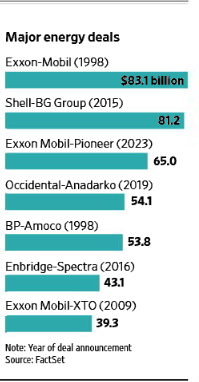
From ExxonMobil’s record-breaking $83.1 billion acquisition spree to the strategic positioning moves of European giants like Shell, these transactions represent far more than simple corporate consolidation. They embody strategic responses to evolving energy demands, technological disruption, climate pressures, and the perpetual quest for operational synergies in an increasingly competitive global marketplace.
The data reveals a fascinating pattern: the largest energy deals cluster around two distinct periods of industry transformation. The late 1990s saw massive consolidation as companies prepared for the new millennium’s energy challenges, while the 2010s and 2020s have been marked by strategic acquisitions aimed at securing future energy portfolios in an era of energy transition.
The Record Breakers – ExxonMobil’s Dominance
ExxonMobil’s 1998 merger stands as the undisputed champion of energy sector transactions, representing not just a corporate combination but a fundamental reimagining of what an integrated oil company could achieve. This deal created the world’s largest publicly traded oil company, combining Exxon’s downstream expertise with Mobil’s upstream prowess to form a global energy powerhouse.
The merger’s timing proved prescient, occurring just as the energy sector faced increasing globalization pressures and the need for massive capital investments in emerging markets. The combined entity possessed the financial muscle to pursue mega-projects that neither company could have tackled independently, from deep-water drilling operations to complex liquefied natural gas facilities.
Strategic Rationale Behind the Giants
The ExxonMobil combination exemplified the industry’s shift toward vertical integration and operational efficiency. By merging complementary assets and eliminating redundant operations, the new entity achieved cost synergies that exceeded initial projections while maintaining technological leadership across the entire energy value chain.
The success of this merger established a template for subsequent energy sector consolidation, demonstrating how scale advantages could drive superior returns even in cyclical commodity markets. The deal’s structure, emphasizing cultural integration alongside operational efficiency, became a case study for managing complex industrial mergers.
Modern Era Acquisitions: The Pioneer Play
Fast-forwarding to 2023, ExxonMobil’s $65 billion acquisition of Pioneer Natural Resources represents a strategic pivot toward unconventional oil production in the Permian Basin. This transaction reflects the company’s commitment to high-return, low-cost production assets while maintaining its position as a leading global energy producer.
The Pioneer acquisition demonstrates how modern energy deals prioritize asset quality over sheer size, focusing on resources that can generate attractive returns across various commodity price cycles. This strategic approach has enabled ExxonMobil to maintain its industry leadership position while adapting to changing market dynamics.
European Champions and Strategic Positioning
Shell’s 2015 acquisition of BG Group for $81.2 billion marked a pivotal moment in the company’s evolution toward becoming a global gas and power leader. This transaction significantly expanded Shell’s liquefied natural gas portfolio while adding high-quality deepwater assets in Brazil and other strategic locations.
The BG Group acquisition reflected Shell’s early recognition that natural gas would serve as a crucial bridge fuel in the global energy transition. By securing substantial LNG assets and infrastructure, Shell positioned itself to capitalize on growing Asian demand for cleaner-burning fossil fuels while building capabilities in emerging energy markets.
The Shell-BG combination faced significant integration challenges, including cultural differences, operational complexity, and the need to realize substantial cost synergies to justify the premium valuation. However, Shell’s systematic approach to combining the organizations ultimately delivered projected benefits while creating new opportunities for growth.
The success of this integration enabled Shell to strengthen its position in key growth markets while developing expertise in complex deepwater projects. These capabilities have proven valuable as the company navigates toward lower-carbon energy solutions while maintaining strong traditional energy operations.
Occidental-Anadarko: The $54.1 Billion Battle
Occidental Petroleum’s 2019 acquisition of Anadarko for $54.1 billion represented one of the most contested takeover battles in recent energy sector history. Occidental’s successful bid overcame competing offers from Chevron, demonstrating the strategic value placed on Anadarko’s diverse asset portfolio.
This transaction significantly expanded Occidental’s presence in the Permian Basin while adding valuable chemical operations and international assets. The deal reflected the continued importance of unconventional oil resources in North American energy production and the premium valuations these assets commanded during favorable market conditions.
Historical Context and Market Dynamics
The energy sector’s late 1990s consolidation wave, exemplified by transactions like BP-Amoco ($53.8 billion in 1998), reflected fundamental changes in global energy markets. Deregulation, technological advancement, and increasing capital requirements drove companies to seek scale advantages through strategic combinations.
These mega-mergers occurred during a period of relatively low oil prices, when companies with strong balance sheets could acquire quality assets at attractive valuations. The timing proved fortuitous, as many of these combinations delivered substantial value when energy prices recovered in subsequent years.
Technology and Operational Efficiency
The successful energy deals of this era emphasized technology integration and operational efficiency as key value drivers. Companies that effectively combined their technical capabilities and eliminated operational redundancies generated superior returns while building competitive advantages in exploration, production, and refining operations.
These transactions also facilitated knowledge transfer and best practice sharing across previously separate organizations, often resulting in breakthrough innovations that benefited the entire industry. The combination of diverse technical teams frequently produced solutions that neither organization could have developed independently.
Geographic and Asset Diversification
Major energy deals have consistently emphasized geographic and asset diversification as risk management strategies. By combining complementary portfolios spanning different regions, resource types, and market segments, merged entities reduced their exposure to localized disruptions while creating opportunities for operational optimization.
This diversification strategy proved particularly valuable during periods of geopolitical instability or regional market disruption, when companies with global footprints could maintain operations and cash flow despite localized challenges.
Strategic Implications and Value Creation
The most successful energy sector transactions have demonstrated that value creation extends far beyond simple cost cutting and operational redundancies. Leading companies have leveraged their enlarged scale to pursue previously inaccessible opportunities, from massive infrastructure projects to breakthrough technology development initiatives.
Integration excellence has emerged as a critical differentiator, with successful acquirers investing heavily in cultural alignment, systems integration, and talent retention. Companies that managed these soft factors effectively typically exceeded their projected synergy targets while maintaining operational momentum during transition periods.
Portfolio Optimization and Capital Allocation
Large-scale energy deals have enabled more sophisticated portfolio optimization and capital allocation strategies. Combined entities possess greater flexibility to high-grade their asset portfolios, divesting non-core assets while concentrating investment in the most attractive opportunities.
This enhanced capital allocation capability has proven particularly valuable in cyclical energy markets, where timing and resource allocation decisions significantly impact long-term returns. Companies with diversified portfolios can maintain investment discipline while capitalizing on favorable market conditions across different segments.
Technology and Innovation Acceleration
Major energy transactions have frequently accelerated technology development and innovation by combining complementary research capabilities and expanding the scale of development programs. These enhanced innovation capabilities have proven crucial as the industry faces increasing pressure to improve efficiency while reducing environmental impact.
The combination of diverse technical teams has often produced breakthrough solutions that address complex operational challenges while creating competitive advantages. These innovation benefits frequently exceed initial projections and continue delivering value long after transaction completion.
Energy Transition and Strategic Positioning
The energy sector’s ongoing transition toward lower-carbon solutions is reshaping M&A strategies and transaction priorities. Companies are increasingly seeking acquisitions that provide access to renewable energy assets, carbon capture technologies, and other solutions aligned with evolving environmental regulations and customer preferences.
This strategic shift is evident in recent transactions that emphasize portfolio diversification beyond traditional oil and gas assets. Companies are using M&A as a tool to accelerate their energy transition strategies while maintaining strong cash generation from existing operations.
Valuation Considerations and Market Dynamics
Current energy sector valuations reflect complex interactions between traditional commodity market dynamics and longer-term transition considerations. Companies with high-quality, low-cost assets continue commanding premium valuations, while those with exposure to emerging energy technologies benefit from additional strategic premiums.
The challenge for acquirers lies in balancing immediate cash flow generation with longer-term strategic positioning. Successful transactions must deliver attractive returns under current market conditions while providing flexibility to adapt to evolving energy market dynamics.
The Evolution Continues
The landscape of major energy deals reflects an industry in constant evolution, adapting to changing market conditions, technological advancement, and environmental pressures. From the record-setting combinations of the late 1990s to the strategic positioning moves of recent years, these transactions have consistently reshaped competitive dynamics while creating substantial shareholder value.
Looking forward, energy sector M&A will likely continue reflecting the industry’s dual challenge of maintaining strong returns from traditional operations while building capabilities in emerging energy solutions. Companies that successfully balance these priorities through strategic acquisitions will be best positioned to thrive in the evolving global energy landscape.
The trillion-dollar deals examined here represent more than corporate transactions; they embody the strategic choices that will define the energy sector’s future. As the industry continues its transformation, the lessons learned from these mega-mergers will guide the next generation of energy leaders in building sustainable, competitive enterprises capable of meeting the world’s evolving energy needs.