


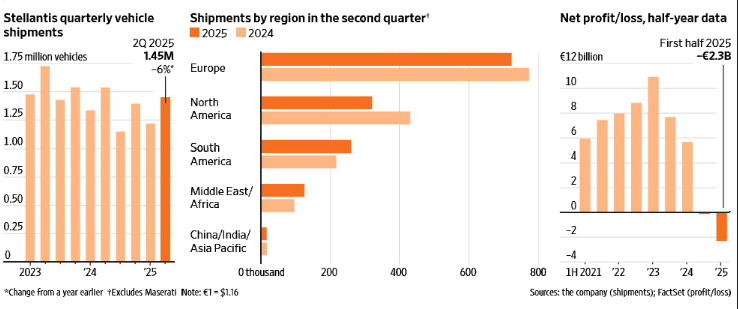
Stellantis N.V., the multinational automotive manufacturing corporation, faced significant headwinds in the second quarter of 2025, with vehicle shipments declining to 1.45 million units—a 6% decrease from the previous year. The company’s performance reflected broader challenges in the global automotive industry, with regional variations highlighting both structural issues and market-specific dynamics that continue to pressure the world’s fourth-largest automaker.
The financial data reveals a complex picture of a company in transition, grappling with production adjustments, market shifts, and strategic realignments across its diverse portfolio of brands including Jeep, Ram, Dodge, Chrysler, Peugeot, Citroën, Fiat, Alfa Romeo, and Maserati. Q2 2025 Estimated Global Consolidated Shipments of 1.4 Million Units, -6% y-o-y, indicating persistent challenges in maintaining volume growth amid evolving market conditions.
Europe: The Dominant Market Shows Resilience
Europe emerged as Stellantis’ strongest performer in Q2 2025, accounting for the largest share of regional shipments with approximately 800,000 units. This performance underscores the company’s deep historical roots and market penetration across European markets, where brands like Peugeot, Citroën, Fiat, and Opel maintain strong consumer loyalty and dealer networks.
The European market’s relative stability can be attributed to several factors: the company’s diverse brand portfolio catering to different market segments, strong presence in commercial vehicles, and the gradual recovery of European economies post-2024 uncertainties. However, the automotive industry in Europe continues to face challenges related to the transition to electric vehicles, regulatory compliance costs, and supply chain disruptions that have become endemic since 2020.
Stellantis’ European operations benefit from integrated manufacturing capabilities and established supplier relationships, allowing the company to maintain production efficiency despite broader industry challenges. The region’s performance suggests that local market knowledge and brand heritage continue to provide competitive advantages in mature automotive markets.
North America: Struggling with Production Challenges
North America presented a more challenging picture for Stellantis in Q2 2025, with shipments significantly lower than European levels at approximately 400,000 units. This performance reflects ongoing difficulties that have plagued the company’s North American operations throughout 2025, including production disruptions and market share pressures.
Lower North American production, a consequence of extended holiday downtime in January, contributed to reduced shipments early in the year, with effects continuing to ripple through Q2. The North American market represents a critical profit center for Stellantis, particularly through its Jeep and Ram brands, making these production challenges particularly concerning for overall financial performance.
The company’s North American struggles highlight the complexity of managing large-scale automotive operations across different regulatory environments, labor markets, and consumer preferences. Competition from both traditional Detroit automakers and emerging electric vehicle manufacturers has intensified pressure on market share, while supply chain disruptions continue to affect production planning and inventory management.
Emerging Markets: Mixed Results Across Regions
Stellantis’ performance in South America, Middle East/Africa, and China/India/Asia Pacific regions showed varied results, with each presenting unique challenges and opportunities. South America maintained moderate shipment levels, reflecting the company’s established presence in markets like Brazil and Argentina, where Fiat and Jeep brands have historically performed well.
The Middle East and Africa region showed more modest volumes, consistent with these markets’ smaller scale but growing importance for global automotive manufacturers. These regions represent long-term growth opportunities, particularly as economic development drives increased vehicle ownership rates.
The China/India/Asia Pacific region presented the most challenging environment, with minimal shipment volumes reflecting Stellantis’ limited market penetration in these crucial growth markets. This performance gap represents a strategic vulnerability, as Chinese and Indian markets are expected to drive global automotive growth over the next decade.
Financial Performance Implications
Profitability Under Pressure
The first half of 2025 financial data reveals significant pressure on Stellantis’ profitability, with the company reporting a €2.3 billion loss for the period. This dramatic shift from profitable operations in previous periods reflects both volume declines and margin compression across key markets.
Several factors contributed to this challenging financial performance: reduced production volumes leading to fixed cost deleverage, increased warranty and quality-related expenses, and strategic investments in electric vehicle technology that have not yet generated offsetting revenue streams. The company’s traditional profit drivers, particularly in North America, faced headwinds that more than offset stronger performance in other regions.
Lower-than-expected earnings per share (EPS) of $0.2116, falling short of the consensus estimate demonstrates the gap between investor expectations and operational reality, highlighting the challenges facing management in navigating the current automotive landscape.
Cash Flow and Liquidity Concerns
The financial results indicate strain on Stellantis’ cash generation capabilities, with the company working to maintain adequate liquidity while funding ongoing operations and strategic initiatives. Automotive manufacturing requires substantial working capital for inventory management, supplier payments, and production facility maintenance, making cash flow management critical during challenging periods.
The company’s approach to managing through this period includes careful inventory management, supplier relationship optimization, and selective investment in future technology platforms. However, the pressure on current profitability limits financial flexibility for aggressive strategic investments or market expansion initiatives.
Strategic Context and Industry Dynamics
Electric Vehicle Transition Challenges
Stellantis’ Q2 2025 performance must be understood within the context of the broader automotive industry’s transition to electric vehicles. Plans to launch 10 new models in 2025, including three STLA Medium products in H2 2025: Jeep® Compass, Citroën C5 Aircross and DS No8 indicates the company’s commitment to new technology platforms, but this transition requires substantial upfront investment while traditional product lines face declining demand.
The STLA (Stellantis Technology and Innovation Architecture) platform represents the company’s strategic response to electrification requirements, providing a flexible foundation for multiple brands and market segments. However, the timing of consumer adoption and regulatory mandates creates uncertainty about the pace of return on these investments.
Competitive Landscape Evolution
The automotive industry in 2025 continues to evolve rapidly, with traditional manufacturers competing against both established rivals and new entrants focused on electric and autonomous vehicle technologies. Stellantis faces particular challenges in markets like China, where local manufacturers have gained significant advantages in electric vehicle technology and cost structure.
Tesla’s continued market leadership in premium electric vehicles, coupled with the emergence of Chinese manufacturers like BYD in global markets, has intensified competitive pressure on traditional automakers. Stellantis’ response requires balancing short-term financial performance with long-term strategic positioning, a challenge reflected in current operational results.
Looking Forward: Recovery and Transformation Prospects
Operational Recovery Initiatives
Management’s response to Q2 2025 challenges includes several operational improvements focused on production efficiency, cost management, and market positioning. The company has initiated programs to optimize manufacturing capacity utilization, reduce structural costs, and improve supply chain resilience.
2025 financial guidance of “Positive” Net Revenue Growth, “Mid-Single Digits” AOI margin and “Positive” industrial free cash flows suggests management confidence in operational improvements during the second half of 2025, though achieving these targets will require successful execution of multiple strategic initiatives simultaneously.

Long-term Strategic Positioning
Stellantis’ long-term success depends on successfully navigating the industry transformation while maintaining financial stability and market position. The company’s diverse brand portfolio provides both opportunities and challenges, offering market coverage across different segments and regions while requiring substantial resources to maintain competitive positions.
The automotive industry’s capital requirements for electric vehicle development, autonomous driving technology, and global market presence continue to increase, making scale and efficiency increasingly important for sustainable profitability. Stellantis’ ability to leverage its global footprint and brand diversity will be crucial for generating the returns necessary to fund continued transformation initiatives.
Success in emerging markets, particularly in Asia, will be essential for long-term growth, requiring potentially significant strategic investments or partnership arrangements to gain market access and competitive positioning. The company’s current weak position in these markets represents both a vulnerability and an opportunity for future development.
Conclusion
Stellantis’ Q2 2025 performance reflects the broader challenges facing traditional automotive manufacturers in a rapidly evolving industry landscape. While regional variations in performance highlight both strengths and vulnerabilities in the company’s global operations, the overall picture suggests a company working through a difficult transition period.
The combination of production challenges, market share pressure, and transformation costs has created near-term financial stress that requires careful management and strategic focus. However, the company’s established market positions, brand portfolio diversity, and ongoing technology investments provide a foundation for potential recovery as industry conditions stabilize and new product introductions gain market traction.
The success of Stellantis’ strategic initiatives over the remainder of 2025 and into 2026 will be crucial for determining whether current challenges represent a temporary adjustment period or indicate more fundamental competitive positioning issues. Investors and industry observers will be closely monitoring the company’s ability to execute operational improvements while maintaining progress on long-term transformation objectives.