


The concept of Bitcoin treasury has emerged as one of the most significant financial innovations of the digital age. As traditional monetary policies face unprecedented challenges and inflation concerns mount globally, forward-thinking corporations and institutions are increasingly turning to Bitcoin as a treasury reserve asset. This strategic shift represents more than just an investment decision—it’s a fundamental reimagining of how organizations store and preserve value in an increasingly digital economy.
Bitcoin treasury refers to the practice of holding Bitcoin as a primary or secondary reserve asset on an organization’s balance sheet. Unlike traditional treasury assets such as cash, bonds, or gold, Bitcoin offers unique properties that make it particularly attractive as a store of value: it’s decentralized, has a fixed supply cap of 21 million coins, operates 24/7 globally, and exists independently of any single government or financial institution.
The movement gained significant momentum in 2020 when MicroStrategy, led by CEO Michael Saylor, became the first major publicly-traded company to adopt Bitcoin as its primary treasury reserve asset. This bold move opened the floodgates for other corporations to reconsider their treasury strategies, leading to a new paradigm in corporate finance where digital assets play a central role in wealth preservation and growth.
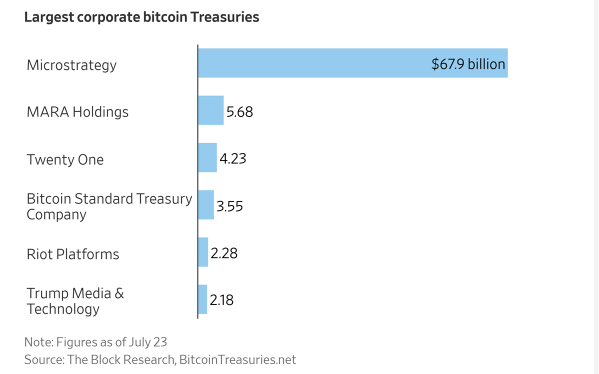
The Foundation of Bitcoin Treasury Strategy
Understanding the Strategic Rationale
The primary driver behind Bitcoin treasury adoption stems from concerns about monetary debasement and the long-term purchasing power of fiat currencies. Traditional treasury assets like cash and government bonds face significant risks in an environment of expansive monetary policy and low interest rates. Cash, while liquid, loses purchasing power over time due to inflation. Government bonds, once considered the safest investment, now offer returns that often fail to keep pace with inflation, effectively guaranteeing a loss of real value over time.
Bitcoin presents a compelling alternative with its mathematically enforced scarcity. Unlike fiat currencies, which can be printed in unlimited quantities, Bitcoin’s supply is capped at 21 million coins, with new coins created at a predictable and decreasing rate through the mining process. This scarcity, combined with growing institutional adoption, creates a powerful value proposition for treasury management.
Key Benefits of Bitcoin Treasury Holdings
Inflation Hedge: Bitcoin’s fixed supply makes it an attractive hedge against monetary inflation. As central banks around the world continue to expand money supplies, assets with fixed supply become increasingly valuable. Historical data suggests that Bitcoin has outperformed traditional inflation hedges like gold over the long term, though it comes with higher volatility.
Portfolio Diversification: Adding Bitcoin to a treasury portfolio provides diversification benefits due to its low correlation with traditional assets. During periods of financial market stress, Bitcoin has sometimes moved independently of stocks and bonds, providing potential protection against systemic risks in traditional financial markets.
24/7 Liquidity: Unlike traditional markets that operate during specific hours, Bitcoin trades continuously around the globe. This provides treasury managers with unprecedented flexibility in managing their positions and responding to market conditions or operational needs at any time.
Technological Innovation Exposure: By holding Bitcoin, organizations gain exposure to the broader blockchain and cryptocurrency ecosystem, positioning themselves at the forefront of financial technological innovation. This can provide strategic advantages as digital assets become more integrated into the global financial system.
Implementation Considerations
Successfully implementing a Bitcoin treasury strategy requires careful planning and risk management. Organizations must consider several critical factors:
Volatility Management: Bitcoin’s price volatility is significantly higher than traditional treasury assets. Companies must be prepared for substantial short-term fluctuations in the value of their Bitcoin holdings and ensure they have adequate cash reserves for operational needs.
Regulatory Compliance: The regulatory landscape for Bitcoin continues to evolve. Organizations must stay current with regulations in their jurisdictions and ensure full compliance with reporting requirements and tax obligations.
Custody Solutions: Securing Bitcoin holdings requires specialized knowledge and infrastructure. Organizations must choose between self-custody solutions, which provide maximum control but require significant technical expertise, and third-party custody services, which offer professional security but introduce counterparty risk.
Accounting and Reporting: Current accounting standards require Bitcoin to be treated as an intangible asset, subject to impairment testing. This can create earnings volatility even when the underlying investment strategy is sound. Organizations must prepare for this accounting treatment and communicate effectively with stakeholders about the long-term strategic value of their Bitcoin holdings.
Operational Excellence in Bitcoin Treasury Management
Custody and Security Best Practices
The security of Bitcoin holdings represents the most critical operational aspect of treasury management. Unlike traditional assets held by banks or brokers, Bitcoin requires organizations to take direct responsibility for asset security or carefully select qualified custodial partners.
Multi-Signature Security: Industry best practice involves using multi-signature wallets that require multiple private keys to authorize transactions. This approach distributes risk and prevents single points of failure. A typical configuration might require 3 out of 5 signatures, with keys held by different executives or secure storage systems.
Cold Storage Solutions: The majority of Bitcoin treasury holdings should be stored in cold storage—completely offline systems that are immune to cyber attacks. Hardware security modules (HSMs) and air-gapped computers provide the highest levels of security for long-term storage.
Regular Security Audits: Organizations should conduct regular security audits of their Bitcoin storage and management systems. This includes testing backup and recovery procedures, verifying the integrity of stored keys, and ensuring that security protocols are being followed consistently.
Insurance Coverage: While still developing, Bitcoin insurance products are becoming more sophisticated. Organizations should explore coverage options for their holdings, particularly when using third-party custody services.
Risk Management Framework
Effective Bitcoin treasury management requires a comprehensive risk management framework that addresses the unique characteristics of digital assets.
Position Sizing: Organizations should carefully consider what percentage of their treasury to allocate to Bitcoin. While there’s no universal rule, many companies start with allocations between 1-10% of total treasury assets, with some more aggressive adopters going as high as 100% of their excess cash reserves.
Dollar-Cost Averaging: Rather than making large lump-sum purchases, many organizations employ dollar-cost averaging strategies to build their Bitcoin positions over time. This approach helps smooth out volatility and reduces the impact of timing decisions.
Stakeholder Communication
Successful Bitcoin treasury implementation requires effective communication with all stakeholders, including shareholders, employees, customers, and regulators.
Board Education: Board members must understand the strategic rationale for Bitcoin adoption, the risks involved, and their fiduciary responsibilities. Regular education sessions and clear reporting on Bitcoin holdings help ensure board support for the strategy.
Shareholder Transparency: Public companies must provide clear, regular disclosure about their Bitcoin holdings, including purchase prices, current values, and the impact on financial statements. Transparency helps build stakeholder confidence and reduces uncertainty.
Employee Understanding: Employees should understand the organization’s Bitcoin strategy and how it supports the company’s long-term objectives. This is particularly important in companies where Bitcoin holdings represent a significant portion of overall value.
Future Outlook and Advanced Strategies
Emerging Trends in Bitcoin Treasury Management
The Bitcoin treasury landscape continues to evolve rapidly, with new tools, services, and strategies emerging regularly. Organizations that stay ahead of these trends will be better positioned to maximize the benefits of their Bitcoin holdings.
Institutional Infrastructure Development: The infrastructure supporting Bitcoin treasury management is rapidly maturing. New custody solutions, insurance products, and financial services are being developed specifically for institutional Bitcoin holders. This includes everything from enhanced security solutions to specialized lending and borrowing services.
Integration with Traditional Finance: Bitcoin is becoming increasingly integrated with traditional financial systems. This includes the development of Bitcoin ETFs, regulated Bitcoin futures markets, and banking services that support Bitcoin holdings. These developments make it easier for organizations to manage Bitcoin as part of their overall treasury strategy.
Advanced Treasury Strategies
As the Bitcoin treasury market matures, more sophisticated strategies are emerging that go beyond simple buy-and-hold approaches.
Regulatory Evolution and Future Considerations
The regulatory environment for Bitcoin continues to evolve, and organizations must stay ahead of these changes to ensure continued compliance and optimal strategy implementation.
Accounting Standards Evolution: Accounting standards for Bitcoin are likely to evolve as the asset class matures. Organizations should stay informed about potential changes that might affect how Bitcoin holdings are reported and valued on financial statements.
Tax Optimization: Tax treatment of Bitcoin continues to develop, with potential changes in capital gains treatment, like-kind exchange rules, and other tax considerations. Proactive tax planning can help organizations optimize the after-tax returns of their Bitcoin treasury strategy.
Global Regulatory Harmonization: As Bitcoin adoption grows globally, there’s increasing pressure for regulatory harmonization across jurisdictions. Organizations operating in multiple countries must navigate varying regulatory requirements while positioning themselves for future regulatory convergence.
The Future of Corporate Treasury
Bitcoin treasury management represents a fundamental shift in how organizations think about value storage and wealth preservation. While the strategy comes with unique risks and challenges, the potential benefits of participating in the digital asset revolution are substantial.
Organizations considering Bitcoin treasury adoption should approach it as a long-term strategic initiative rather than a short-term investment opportunity. Success requires careful planning, robust risk management, operational excellence, and clear stakeholder communication. Those who execute effectively will likely find themselves well-positioned for a future where digital assets play an increasingly central role in the global financial system.
The Bitcoin treasury movement is still in its early stages, but the foundation has been laid for broader adoption. As infrastructure improves, regulations clarify, and institutional comfort with digital assets grows, Bitcoin treasury management will likely become a standard component of modern corporate finance. Organizations that begin building their capabilities now will have significant advantages as this transformation accelerates.
The key to success lies not in timing the market or making speculative bets, but in developing a deep understanding of Bitcoin’s unique properties and building the organizational capabilities necessary to harness them effectively. With proper implementation, Bitcoin treasury management can provide organizations with a powerful tool for value preservation and growth in an increasingly digital world.