

Insurers are cutting benefits and exiting from unprofitable markets, and Wall Street is cheering them on. Once rewarded by investors for rapid expansion in the lucrative privatized Medicare program, companies are now being applauded for showing restraint amid rising medical costs and lower government payments.
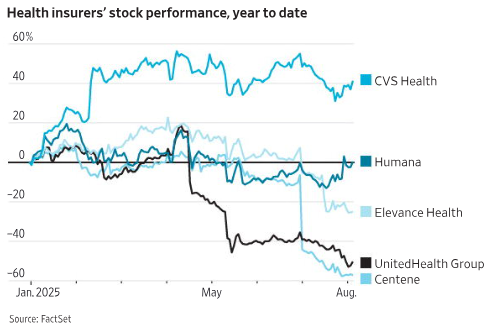
Humana and CVS Health which operates Aetna, both beat earnings expectations in their most recent quarterly updates and saw their shares rise, bucking a broader downturn in health-insurance stocks. Both moved to retrench their Medicare Advantage businesses this year, with Humana projecting a loss of as many as 500,000 members from its plans sold directly to seniors.
In contrast, industry giant UnitedHealth Group more aggressively in Medicare this year—but that growth came with soaring costs and disappointing results. Its stock has lost nearly half its value, and the company is now planning a major pullback of its own for 2026.
Insurers are learning the hard way that restoring profitability means accepting lower growth or shrinkage in their Medicare Advantage rolls. And the pullback isn’t limited to Medicare. Similar retreats are under way in Medicaid and the Affordable Care Act (ACA) exchanges.
Insurers say they aren’t pulling back by choice. For years, Medicare Advantage was the golden goose—delivering relatively high margins and steady growth. That spurred a flood of increasingly generous plans aimed at winning seniors and market share. Now that strategy is unraveling, as Wall Street grows wary of just how unpredictable profits in government programs have become.
Many of the members CVS and Humana dropped this year ended up in UnitedHealth’s plans. That has raised concerns about a high-cost population bouncing from insurer to insurer. But Humana CEO James Rechtin pushed back on that idea, saying all members can be profitable with the right product design. He called the industry wide cutbacks in benefits “good for the sector.”
Until that picture clears, investors will continue to reward restraint and tightly managed risk. In today’s Medicare Advantage market, and across government insurance programs, growth is taking a back seat to profitability.