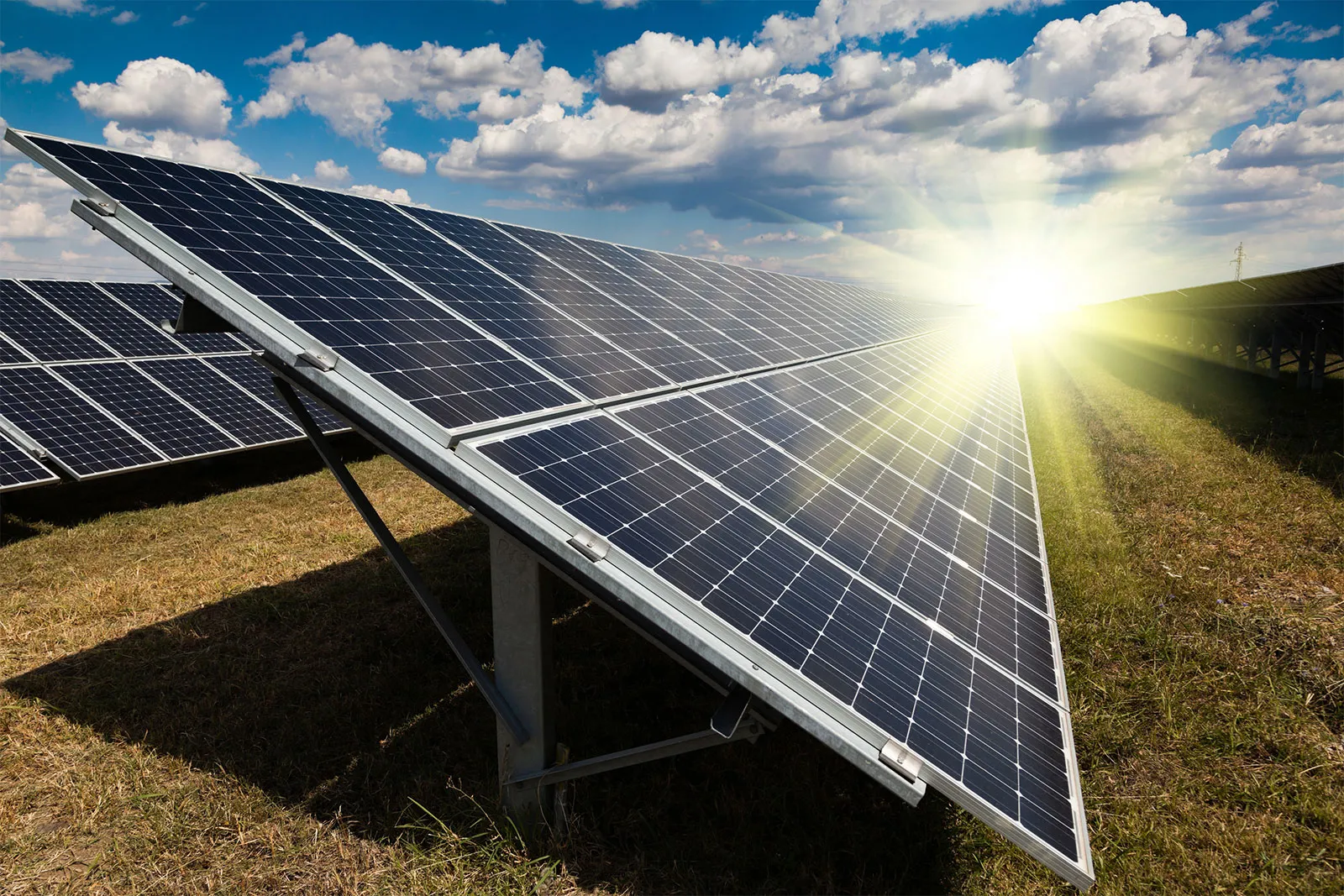
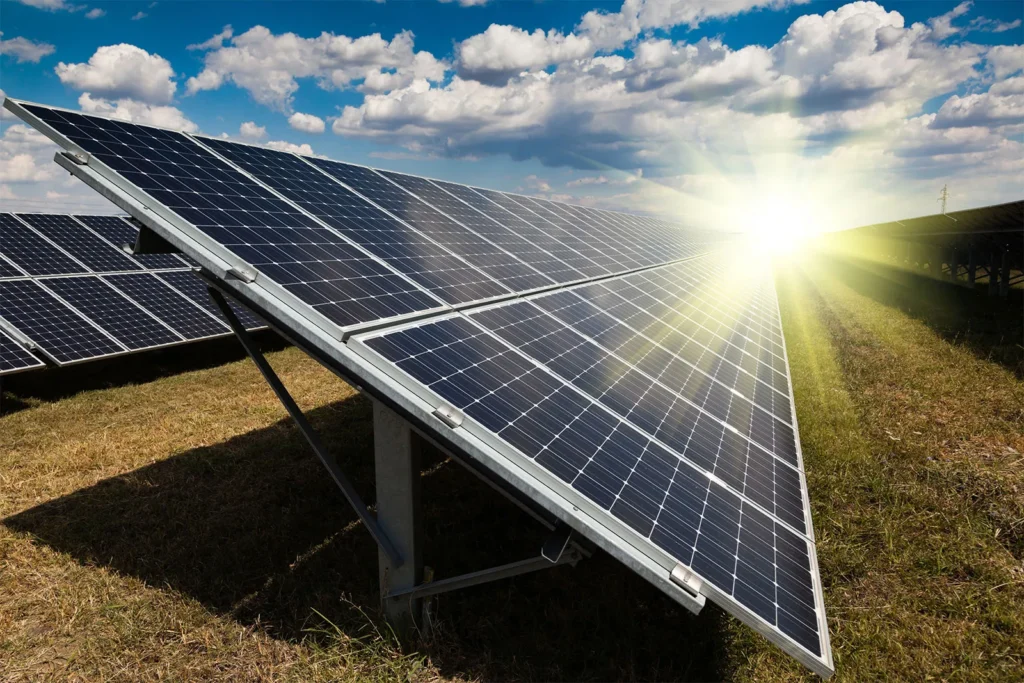
The world’s ultimate petrostate is turning to solar power. Saudi Arabia is building some of the world’s biggest solar farms, along with giant arrays of batteries to store their electricity. The rollout is making the country into one of the fastest-growing markets for solar power from a near-standing start.
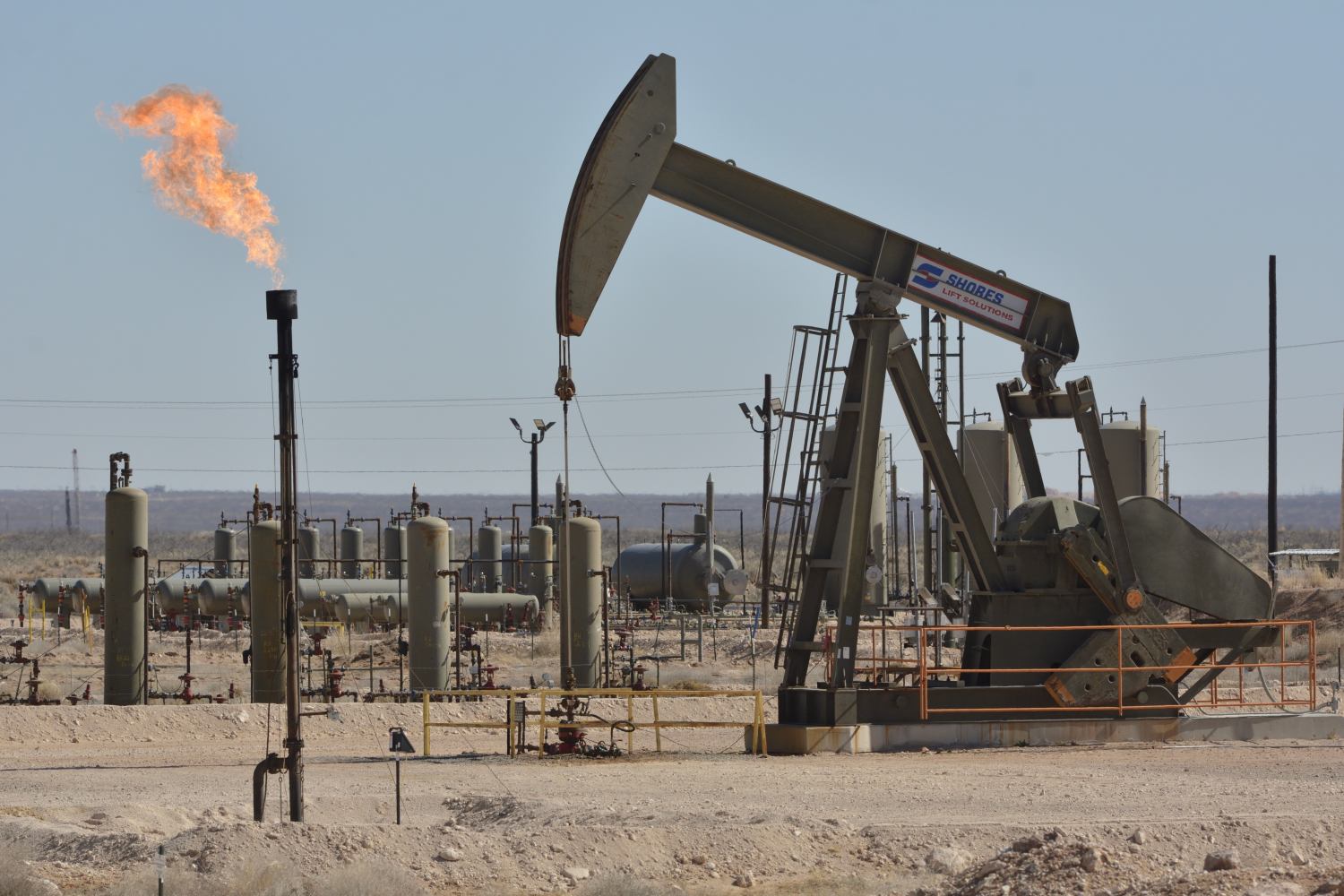
The kingdom is betting that sunshine can transform its economy and bolster its coffers. It needs electricity for new tourism resorts, factories and AI data centers. Green energy could squeeze more value from the fossil fuels that made the kingdom rich. Saudi Arabia burns oil to generate electricity; embracing alternatives frees up barrels for export.
The spread of glass across the desert is one of the starkest illustrations yet of how the plummeting cost of Chinese made solar panels and batteries is changing how the world generates power.
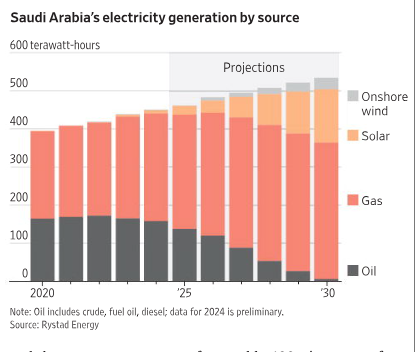
Saudi Arabia aims to get half its electricity from clean sources by 2030. ACWA, whose largest shareholder is Saudi Arabia’s sovereign-wealth fund, is charged with delivering most of the new power needed to hit the target— roughly 100 giga watts of capacity. That’s a lot for a country that last year had roughly 4 giga watts of installed solar.
Boosting clean energy was part of Crown Prince Mohammed bin Salman’s grand plan to diversify the kingdom’s economy. For years, progress was scant, even as the country began megaprojects including Neom, the futuristic city in the desert. A $200 billion solar project unveiled by Japan’s SoftBank in 2018 was shelved within months.
That is changing. A trio of Saudi companies, including ACWA, said last month they would invest $8.3 billion in 15 gigawatts of renewable-energy projects, mostly solar along with some wind. That is on top of a slightly larger amount already under construction, according to research firm Rystad Energy. Natural-gas power plants are going up, too.
Saudi Arabia’s clean-energy ambitions reach beyond the Gulf. ACWA has a growing portfolio of power projects across Africa and Asia. The company is working on the world’s biggest facility to use renewables to make and export hydrogen. In July, it said it was exploring the idea of sending electricity to Europe in a consortium with providers of transmission technology and European energy companies.