American companies are repurchasing their shares at a record pace, boosting their balance sheets and fueling the U.S. stock rally.
U.S. companies have announced $983.6 billion worth of stock buybacks so far this year, the best start to a year on record, according to Birinyi Associates data going back to 1982. They are projected to purchase more than $1.1 trillion worth overall in 2025, which would mark an all-time high.
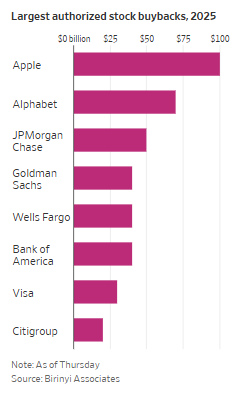
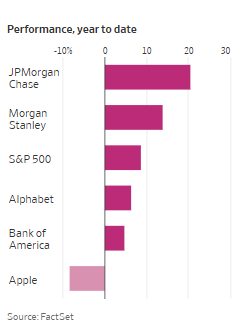
The biggest repurchasers include tech giants Apple and Google parent Alphabet. Big banks such as JPMorgan Chase, Bank of America and Morgan Stanley also are leading the charge.
Strong earnings growth and tax cuts have helped fill corporate coffers, while powering stocks out of their tariff-driven April rout and lifting the S&P 500 and Nasdaq Composite to fresh records. At the same time, the confusion around trade has stalled many businesses’ investment plans, making buybacks a more appealing use of incoming cash.
Both companies and investors often applaud buybacks because the practice reduces the number of shares available to trade, driving up earnings per share and often boosting stock prices.
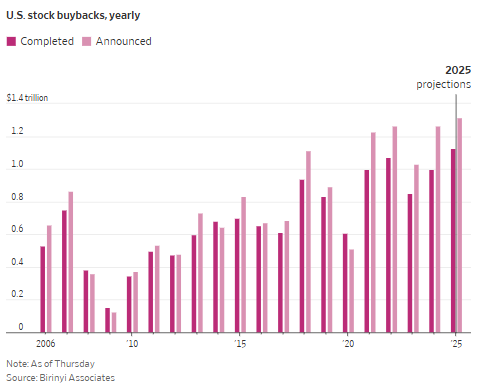
But the practice is controversial in some quarters, with skeptics contending that repurchases serve to prop up the market at a time of already stretched valuations. Some analysts worry that the preference for buybacks over longer-term commitments such as investing in factories or offering dividends suggests President Trump’s trade war stands to weigh on growth over time.
Skeptics also say companies tend to repurchase shares when they are rising rather than when they are relatively cheap, making buybacks an inefficient use of extra cash.
Buybacks have been particularly concentrated at the top, with the 20 largest companies accounting for almost half of repurchases. This year’s largest buyback authorizations are from big tech firms, the beneficiaries of the boom in artificial intelligence stocks, whose balance sheets have ballooned even as their market values have soared.
In May, Apple pledged to funnel up to $100 billion into buying its own shares while warning that tariffs could add millions of dollars to the iPhone maker’s costs. The company has $36.3 billion in cash and cash equivalents, according to quarterly results reported in July.
Alphabet announced a $70 billion stock buyback program earlier this year and reported having about $21 billion in cash and equivalents.
America’s largest banks are also at the forefront of the surge. JPMorgan said in July that the company will buy back $50 billion worth of stock. Bank of America announced a share repurchase program of $40 billion, and Morgan Stanley reauthorized up to $20 billion in buybacks.