

The U.S. is pulling away from Europe in economic growth—and one big reason is the continent’s inability to create new big tech firms the size of Apple, Meta or Google.
Europe is generating far fewer unicorns—new, privately held companies that are worth more than $1 billion—than China and the U.S. Unicorns are a good measure of capitalist innovation; they are almost always fast-growing firms that have found a new way of doing something and are shaking up an existing industry.
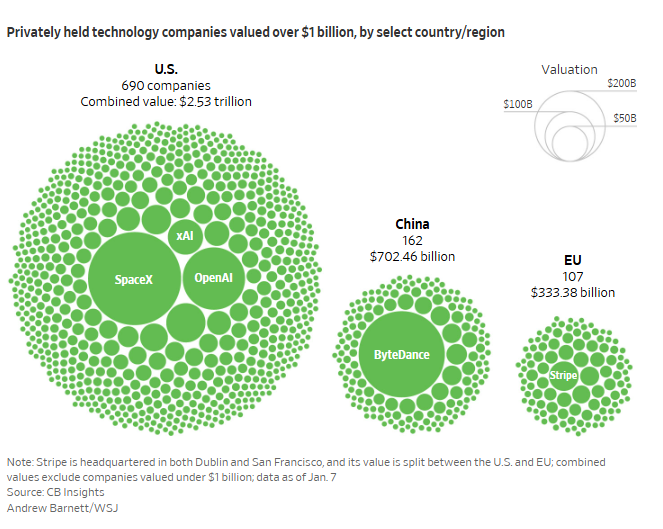
Not only is Europe failing to generate enough unicorns, but those it creates often have trouble growing quickly enough to go public and become dominant players in their respective industries. Part of it is just geography: Europe has 30-plus countries with different laws, language and customs, so getting scale is harder. There is also less venture capital—a fifth of U.S. levels in dollar terms.
A lack of innovation and new technology companies means European workers are becoming slightly less productive than their American counterparts. In the late 1990s, when the digital economy got under way, the average EU worker produced 95% of what their American counterparts made per hour. Now, the Europeans produce less than 80%. They are also working fewer hours, hurting economic growth further.
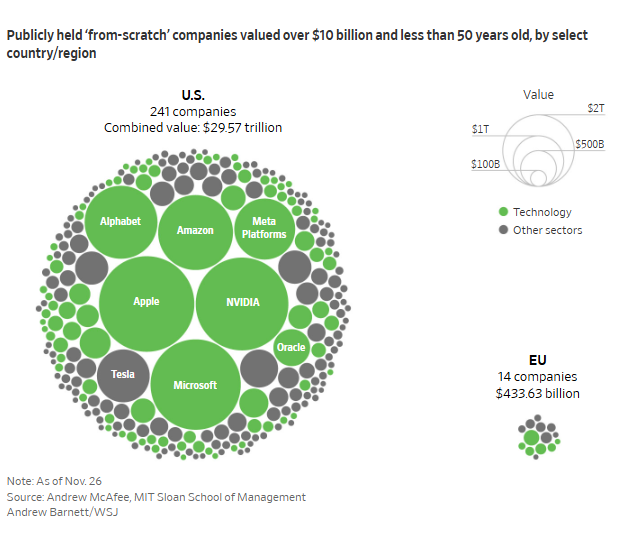
Because of falling productivity, Europe’s economies aren’t growing as quickly as the U.S., and a big divide is opening up. In nominal terms, the EU economy is now one-third smaller than the U.S.’s and has grown at a third of the pace of America over the past few years.