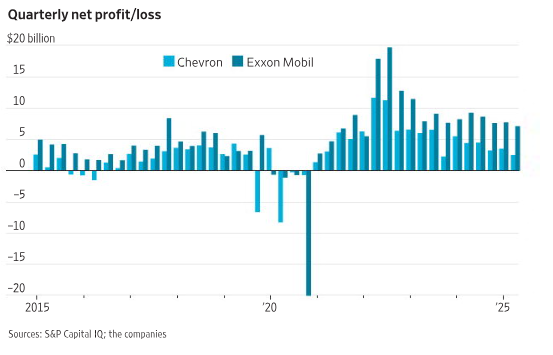
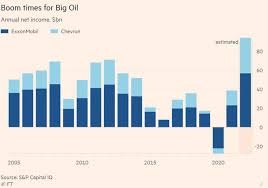
From 2015 through 2019, the data shows moderate profitability with occasional fluctuations. Both companies navigated periods of low oil prices and market uncertainty, but their results remained largely positive. ExxonMobil often reported higher quarterly profits than Chevron, though the two firms moved in similar cycles, highlighting the shared exposure to global crude oil markets.
The most striking feature of the chart occurs in 2020, when both companies reported severe losses. ExxonMobil posted a record quarterly loss approaching $20 billion, while Chevron also experienced multiple negative quarters. This was the direct result of the COVID-19 pandemic, which triggered a collapse in global oil demand, sending crude prices into freefall.
Recovery and Post-2020 Surge
Following the dramatic downturn in 2020, both Chevron and ExxonMobil staged a strong recovery. As global economies reopened and oil demand rebounded, profits surged. Between 2021 and 2022, quarterly earnings reached record highs, with ExxonMobil in particular posting profits above $15 billion in a single quarter.
This sharp rebound was fueled by several key factors:
- Rising Oil Prices – Crude oil prices climbed above pre-pandemic levels as demand outpaced supply.
- Geopolitical Tensions – The conflict in Ukraine and subsequent sanctions on Russian oil pushed prices higher, boosting margins for U.S. producers.
- Operational Efficiency – Both companies cut costs during the pandemic, meaning higher revenues translated directly into stronger profits.
However, after this extraordinary rebound, results began to normalize. By 2023 and 2024, profits stabilized at lower but still solid levels. The chart suggests a return to more sustainable performance, with ExxonMobil maintaining slightly higher earnings but Chevron demonstrating steadier results.
Insights and Future Outlook
The chart provides important lessons about the cyclical nature of the oil industry. Both companies are highly exposed to global energy markets, which means profits can swing dramatically in response to external shocks.
Three key insights stand out:
- Volatility is Inevitable – Oil companies experience extreme highs and lows depending on commodity prices and global demand cycles. The losses of 2020 and the windfall of 2022 are two sides of the same coin.
- ExxonMobil vs. Chevron – ExxonMobil’s scale allows it to generate higher peak profits, but also leaves it more exposed to downturns. Chevron, while smaller, demonstrated relatively greater stability during crises.
- Energy Transition Challenge – Looking forward, both companies face increasing pressure from governments, investors, and society to transition toward cleaner energy. While oil and gas remain highly profitable, long-term growth will require diversification into renewables, carbon capture, and other low-carbon technologies.
In conclusion, the chart reflects not only the financial performance of two oil giants but also the broader story of the global energy market over the last decade: resilience in the face of crisis, sensitivity to geopolitical and economic shifts, and an uncertain but transformative future.