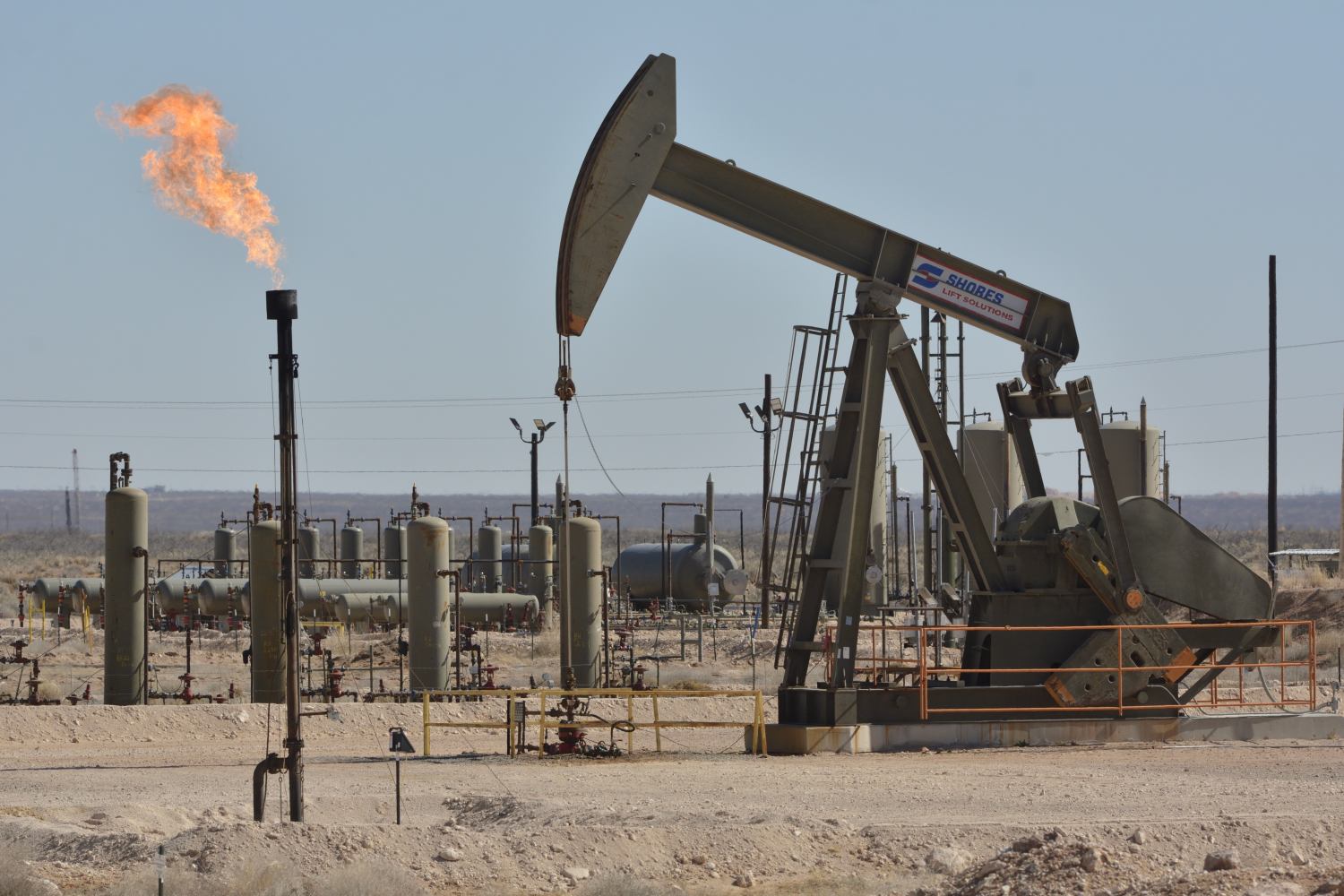
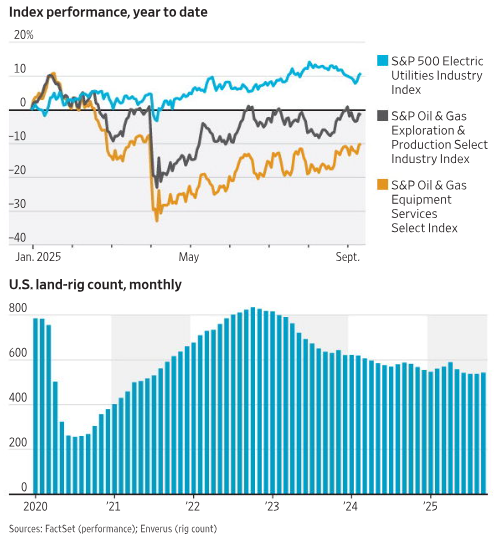
Despite the White House’s “drill, baby, drill” mantra, the business of providing equipment and services for the oil field is hardly booming these days. Now, oil-field service companies are going after a more promising target: tech companies that need power quickly to fuel their artificial-intelligence ambitions.
Compared with oil-field servicers’ typical customer base, tech companies come with growthier outlooks and splashier budgets.
Microsoft alone plans to spend $80 billion on data centers supporting AI this year, 80% more than what major oil companies Exxon and Chevron combined are expected to spend on capital expenditures.
But power isn’t a meaningful part of most oil-field service companies’ revenue yet, which might explain why their share prices are so battered. Excluding Solaris, shares of a basket of smaller oilfield service companies are down roughly 50%. U.S. land-rig count has been on a declining trend since late 2022, according to data from Enverus.
Oil-field service companies plan to use smaller, modular equipment that is off-grid, at least initially.
That means they can provide speedier access to electricity.
These units would be plugged directly onto data centers and use natural gas—typically sourced from a pipeline nearby—as fuel.
This equipment doesn’t face the yearslong wait list that some large-scale natural-gas turbines do, such as ones from GE Vernova .
Smaller, modular units also are well-suited for providing uptime of nearly 100%, the level of reliability data centers require, without requiring a significant amount of backup capacity.
But there are risks. The main one: Data centers might just use these off-grid units for a few years before ditching them for grid connection or a cleaner source of energy.
Compared with the kind of valuation that further-off technology such as nuclear SMR companies command, oil-field service companies are dirt cheap and their equipment is proven. Companies that can show real data-center contracts could end up being an inexpensive AI play for investors bullish on data-center demand but skeptical about the speed at which the grid can accommodate it.