


The trade relationship between the European Union and the United States represents one of the world’s most significant economic partnerships, with billions of dollars in goods flowing across the Atlantic annually. The 2024 trade data reveals fascinating insights into the complementary nature of these two economic powerhouses, highlighting how specialized industries and comparative advantages shape international commerce. From life-saving immunological products to essential energy resources, the EU-US trade corridor demonstrates the intricate web of dependencies that define modern global economics.
This comprehensive analysis examines the top goods traded between these regions, exploring not only the raw numbers but also the underlying economic, technological, and strategic factors that drive these trade flows. The data from 2024 shows clear patterns in sectoral strengths, with the EU excelling in pharmaceutical innovations and precision manufacturing, while the US dominates in energy exports and aerospace technology.
Understanding the Trade Landscape
The Scale of EU-US Commerce
The European Union and United States maintain one of the world’s largest bilateral trade relationships, with the 2024 data showcasing the diverse range of products that cross the Atlantic. The import and export figures reveal a sophisticated economic relationship that extends far beyond simple commodity trading, encompassing high-value manufactured goods, cutting-edge technology, and specialized pharmaceutical products.
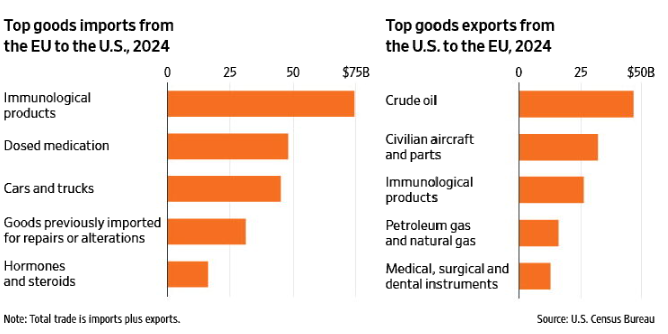
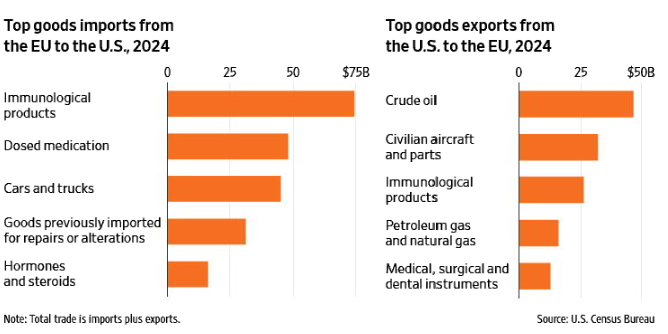
Looking at the EU’s imports from the United States, immunological products lead the way with approximately $75 billion in trade value, representing the largest single category. This dominance reflects the United States’ position as a global leader in biotechnology and pharmaceutical innovation, with American companies producing vaccines, monoclonal antibodies, and other advanced biological therapeutics that are in high demand across European markets.
The second-largest import category is dosed medication, valued at around $30 billion, further emphasizing the pharmaceutical sector’s importance in transatlantic trade. This category includes traditional prescription drugs, over-the-counter medications, and specialized therapeutic compounds that leverage American pharmaceutical companies’ research and development capabilities.
Cars and trucks represent the third-largest import category at approximately $25 billion, showcasing the continued appeal of American automotive brands in European markets. This figure reflects not only direct vehicle sales but also the complex supply chains that characterize modern automotive manufacturing, where components and finished vehicles move between continents multiple times during production.
Diversified Import Portfolio
The remaining categories in EU imports from the US demonstrate the breadth of American industrial capabilities. Goods previously imported for repairs or alterations, valued at around $15 billion, highlight the service-oriented aspects of international trade, where products cross borders not just for final consumption but for value-added processing.
Hormones and steroids, though representing a smaller dollar value at approximately $8 billion, underscore the specialized nature of pharmaceutical trade. These products often require complex manufacturing processes and strict regulatory compliance, areas where American companies have established significant expertise and market presence.
The diversity of these import categories reflects the EU’s role as a sophisticated consumer market with demanding quality standards and regulatory requirements. American exporters have successfully positioned themselves to meet these standards across multiple sectors, from life sciences to automotive manufacturing.
US Export Dominance in Strategic Sectors
Energy Leadership and Market Position
The United States’ export portfolio to the European Union tells a compelling story of American industrial and resource advantages. Crude oil tops the list at approximately $50 billion, representing a dramatic shift in global energy dynamics. This figure reflects the transformation of the United States from a net energy importer to a major energy exporter, driven by the shale revolution and advanced extraction technologies.
The prominence of crude oil in US exports to the EU also highlights European energy security considerations, particularly in light of geopolitical tensions and the EU’s efforts to diversify its energy supply sources. American crude oil provides European refiners with high-quality feedstock while reducing dependence on other suppliers, making this trade relationship strategically important beyond mere commercial considerations.
Civilian aircraft and parts represent the second-largest export category at around $25 billion, showcasing American aerospace industry leadership. This figure encompasses complete aircraft deliveries from manufacturers like Boeing, as well as sophisticated components and systems that support both new aircraft production and the maintenance of existing fleets across European airlines.
Healthcare and Industrial Exports
Immunological products appear as the third-largest US export to the EU, valued at approximately $15 billion. While this category also leads EU imports from the US, its presence in the export data demonstrates the bidirectional nature of pharmaceutical trade. Both regions excel in different aspects of biotechnology and medical innovation, creating opportunities for specialized products to flow in both directions.
The petroleum gas and natural gas category, valued at around $8 billion, complements crude oil exports and reflects the broader American energy export story. Liquefied natural gas (LNG) has become an increasingly important component of US-EU energy trade, with European buyers seeking reliable supplies to support their industrial base and energy transition strategies.
Medical, surgical, and dental instruments round out the top export categories at approximately $6 billion, highlighting American leadership in precision medical device manufacturing. This sector benefits from significant research and development investments, strict quality standards, and close collaboration between American manufacturers and healthcare providers worldwide.
Economic Implications and Market Dynamics
Pharmaceutical Sector Dominance
The prominence of pharmaceutical and biotechnology products in both import and export data reveals the highly specialized nature of this industry. The EU’s $75 billion in immunological product imports from the US, combined with $15 billion in exports of similar products, demonstrates how innovation clusters in different geographic regions create complementary trade relationships.
This pattern reflects the reality that pharmaceutical development requires massive investments in research, specialized manufacturing facilities, and regulatory expertise. Different companies and regions develop comparative advantages in specific therapeutic areas, leading to complex international supply chains where finished products, intermediate compounds, and active pharmaceutical ingredients cross borders multiple times.
The bidirectional nature of pharmaceutical trade also highlights the importance of intellectual property frameworks and regulatory harmonization in facilitating commerce. Both the EU and US maintain sophisticated regulatory systems that, while sometimes creating barriers to entry, also ensure product quality and safety standards that enable consumer confidence in imported products.
Energy Security and Strategic Trade
The $50 billion in crude oil exports from the US to the EU represents more than just commercial transactions; it reflects evolving energy security strategies on both sides of the Atlantic. For the United States, energy exports provide economic benefits while projecting geopolitical influence through reliable supply relationships with key allies.
For the European Union, diversifying energy imports through increased American supplies enhances energy security while supporting broader transatlantic partnerships. This trade relationship has become increasingly important as European policymakers seek to reduce dependence on energy suppliers from politically unstable regions.
The natural gas component of energy trade adds another strategic dimension, as LNG imports require significant infrastructure investments in receiving terminals and distribution networks. The growth of this trade category demonstrates European commitment to American energy supplies and American companies’ ability to develop global LNG supply chains.
Automotive and Aerospace Excellence
The automotive trade data reveals interesting asymmetries in consumer preferences and industrial capabilities. The EU’s $25 billion in car and truck imports from the US suggests strong European demand for American automotive brands, particularly in premium and specialty vehicle segments where American manufacturers have developed distinctive market positions.
The aerospace trade, dominated by civilian aircraft and parts exports from the US, reflects decades of American investment in aviation technology and manufacturing capabilities. This sector benefits from both commercial demand for passenger and cargo aircraft and the spillover effects of defense aerospace investments that create technological advantages in civilian applications.
Future Prospects and Strategic Considerations
Innovation and Competitive Advantages
The 2024 trade data provides insights into where each region maintains competitive advantages and suggests areas where future growth might occur. The pharmaceutical sector’s prominence indicates both regions’ commitment to life sciences innovation, though with different specialization areas that create opportunities for continued collaboration and competition.
The United States’ strength in energy exports positions it well for continued growth as European energy demand evolves, particularly if American companies can adapt to changing European preferences for cleaner energy sources. The infrastructure investments required for LNG trade create long-term relationships that could support sustained growth in this sector.
European imports of American automotive products suggest opportunities for further market penetration, particularly as American manufacturers develop electric vehicle capabilities and European consumers become more interested in innovative transportation technologies. The regulatory environment in both regions increasingly favors clean technologies, potentially reshaping automotive trade patterns.
Regulatory and Policy Implications
The scale and composition of EU-US trade highlighted in the 2024 data have significant implications for policy development in both regions. Pharmaceutical trade relationships require continued cooperation on regulatory standards, intellectual property protection, and approval processes to maintain the innovation incentives that drive product development.
Energy trade relationships carry geopolitical implications that extend beyond commercial considerations. The success of American energy exports to Europe demonstrates the importance of reliable infrastructure, stable political relationships, and compatible regulatory frameworks in supporting strategic trade relationships.
The diversity of trade categories also suggests that broad-based trade agreements, rather than sector-specific arrangements, may be most effective in supporting continued growth in EU-US commerce. The interconnected nature of modern supply chains means that disruptions in one sector can have cascading effects across multiple industries.
Long-term Strategic Outlook
Looking ahead, the patterns revealed in 2024 trade data suggest several key trends that may shape future EU-US commercial relationships. The pharmaceutical sector’s continued growth seems likely given aging populations in both regions and ongoing investment in biotechnology innovation. However, both regions are also investing heavily in domestic pharmaceutical manufacturing capabilities, which could affect future trade patterns.
Energy trade may face the most significant transformation as both regions pursue decarbonization goals. While traditional oil and gas exports may face long-term pressure, opportunities may emerge in clean energy technologies, carbon capture systems, and renewable energy equipment that could create new categories of high-value trade.
The aerospace and automotive sectors face similar transformation pressures as both industries adapt to environmental regulations and changing consumer preferences. Success in these sectors may increasingly depend on companies’ ability to develop and export clean technologies rather than traditional products.
Conclusion
The 2024 EU-US trade data reveals a mature, sophisticated economic relationship characterized by high-value products, technological innovation, and strategic interdependence. From life-saving pharmaceuticals to essential energy supplies, the goods flowing between these regions reflect decades of investment in research, infrastructure, and market development.
The pharmaceutical sector’s dominance in trade flows demonstrates how innovation clusters create comparative advantages that benefit consumers on both sides of the Atlantic. Similarly, American energy exports and European industrial imports show how resource endowments and technological capabilities combine to create mutually beneficial trade relationships.
As both regions face challenges from climate change, technological disruption, and geopolitical uncertainty, the strength of their trade relationship provides a foundation for addressing these challenges collaboratively. The diversity of products traded suggests resilience against sector-specific disruptions, while the high-value nature of many trade categories provides economic incentives for maintaining stable political relationships.
Understanding these trade patterns is essential for policymakers, business leaders, and citizens who want to appreciate how international commerce affects their daily lives and economic prospects. The 2024 data shows that despite periodic tensions and disagreements, the fundamental economic logic supporting EU-US trade remains strong, creating opportunities for continued cooperation and mutual benefit in the years ahead.