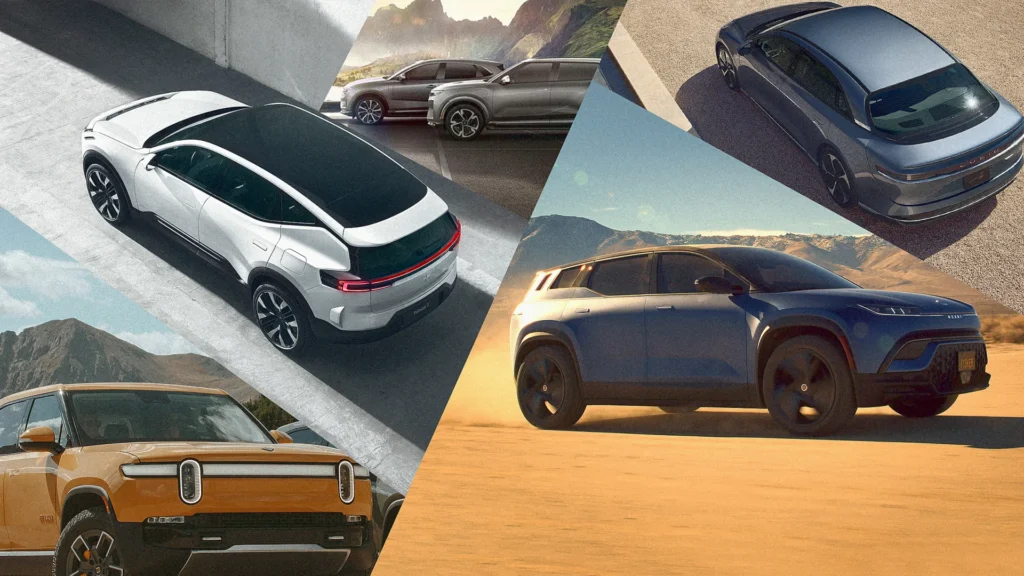
Electric-vehicle startups were struggling before the election. Donald Trump’s victory could send them into a tailspin.
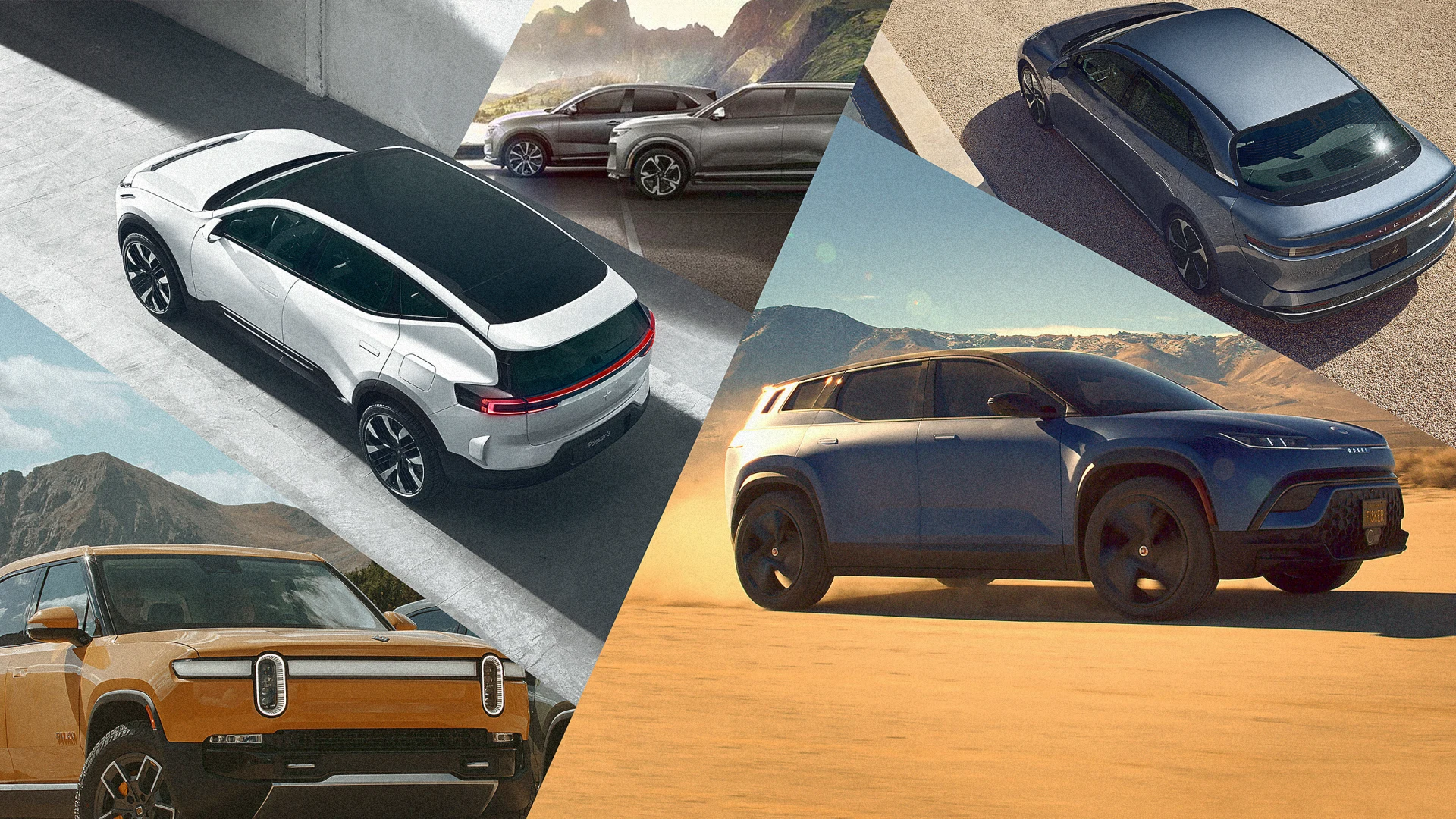
Several high-profile c ompanies, including electric SUV maker Fisker and bus manufacturer Arrival, filed for bankruptcy earlier this year. Swedish-based battery maker Northvolt became the latest casualty, filing for Chapter 11 after BMW canceled a key order.
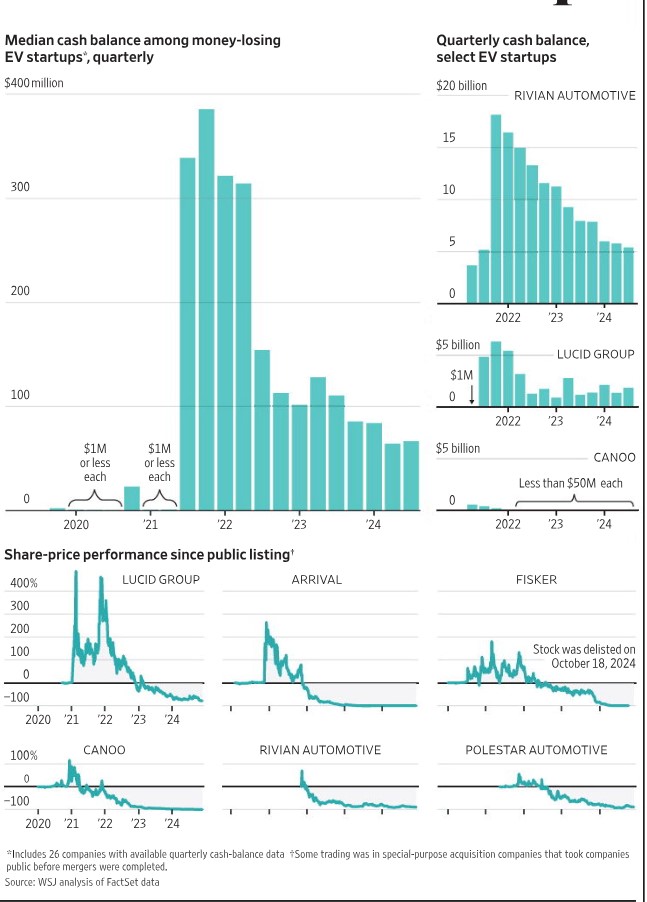
At least a dozen other startups, specializing in electric vehicles or batteries, are at risk of running out of cash by next summer, according to a Wall Street Journal analysis of their most recent filings.
Many of these young companies have been hammered by cooling demand for electric cars, rising costs and supply chain obstacles that have hindered their ability to put out new products quickly.
The shifting political landscape is putting at risk planned investment in the U.S., some of which has been aided by state and federal subsidies.
Many of the startups went public in recent years, riding a wave of enthusiasm for companies trying to emulate Tesla’s success in the past decade.
Some took advantage of a boom in reverse-merger deals, in which a still-fledgling firm merges with a special-purpose acquisition company to list publicly. These deals offer companies an easier route to the public markets than a traditional initial public offering but have been shown to enrich insiders at the expense of other investors.
Many are worried about falling even further behind new rivals in China, such as electric-car maker BYD and battery manufacturer CATL. A U.S. retreat from clean-energy industries could extend China’s vast lead in these sectors.