In 2020, distillate stocks surged above 170 million barrels during the COVID-19 pandemic. Reduced industrial activity, lower transportation demand, and global trade slowdowns caused inventories to build up.
However, once economies reopened in 2021, demand for diesel and heating oil quickly rebounded. Freight movement, e-commerce deliveries, and industrial production surged, driving down inventories. The chart shows this steep decline beginning in late 2020 and continuing through 2022.
Market Tightness 2023–2025
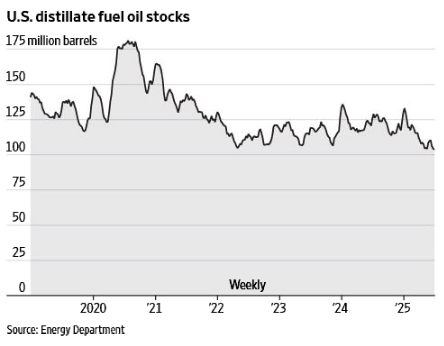
From 2023 onward, inventories stabilized somewhat but remained below historical averages. Several factors explain the tightness:
- Strong Diesel Demand: The U.S. trucking sector and global shipping have been resilient, keeping distillate demand high.
- Refinery Capacity Issues: Limited new refinery capacity in the U.S. and disruptions from maintenance or extreme weather events constrained supply.
- Geopolitical Events: Global conflicts, sanctions, and supply chain disruptions restricted imports of refined products, tightening domestic markets.
By 2025, distillate inventories fell close to the 100-million-barrel mark, a level that leaves little buffer for unexpected demand spikes during the winter heating season or agricultural planting cycles.
Implications and Outlook
Low distillate inventories have several important consequences:
- Higher Prices: Reduced stocks contribute to upward pressure on diesel and heating oil prices, increasing transportation and household energy costs.
- Inflationary Pressure: Rising diesel costs filter into the prices of goods, as trucking and freight are integral to supply chains.
- Energy Security Concerns: Thin inventories leave the U.S. vulnerable to disruptions, whether from hurricanes affecting refineries or geopolitical shocks.
Looking ahead, strategies to mitigate risks include:
- Expanding refinery output or modernizing facilities.
- Increasing use of renewable diesel and biofuels to supplement supply.
- Enhancing strategic fuel reserves to cushion against market shocks.
In conclusion, U.S. distillate fuel oil stocks are at their lowest sustained levels in years. Unless addressed, this tightness could amplify price volatility and energy insecurity, making it a key focus for policymakers, businesses, and investors in 2025.